
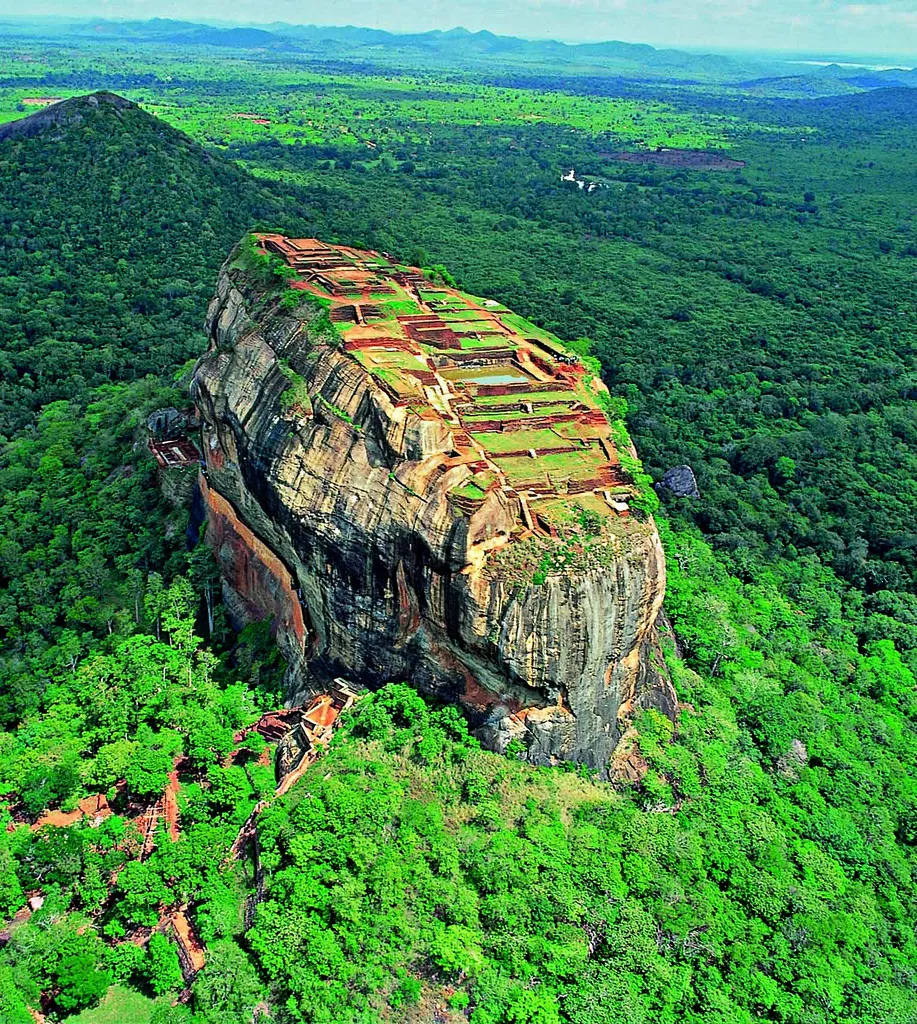
Sigiriya, also known as the Lion Rock, is a UNESCO World Heritage Site located in the central Matale District of Sri Lanka. It is one of the most iconic landmarks and historical sites in the country. Here’s an overview:
- History: Sigiriya dates back to the 5th century AD when it was developed as a royal citadel by King Kasyapa. He chose this location for its strategic advantage, surrounded by dense jungle and with a massive column of rock rising almost vertically to a height of 200 meters (660 feet).
- Architecture: The site consists of a series of terraced gardens, frescoes, and ancient ruins. One of the most distinctive features is the Lion Gate, where visitors ascend through the open mouth of a lion carved into the rock. Unfortunately, only the paws of the lion remain today. At the summit, there are ruins of the royal palace complex.
- Frescoes: The Sigiriya Frescoes, located in a sheltered pocket of the rock approached by a spiral stairway, depict celestial maidens. These paintings are renowned for their remarkable preservation and vibrant colors, offering insight into ancient Sri Lankan artistry.
- Water Gardens: Surrounding the rock are elaborate water gardens with fountains, ponds, and canals, showcasing the advanced hydraulic engineering skills of the ancient inhabitants.
- UNESCO World Heritage Site: Sigiriya was designated a UNESCO World Heritage Site in 1982, recognizing its cultural significance and remarkable preservation.
- Tourism: Today, Sigiriya is one of Sri Lanka’s most popular tourist destinations, attracting visitors from around the world who come to marvel at its historical and architectural wonders. It offers a unique blend of natural beauty, history, and cultural heritage.
- Visiting Sigiriya: Visitors can climb to the summit of Sigiriya, although the ascent can be steep and challenging. The climb typically takes around 1.5 to 2 hours, but the panoramic views from the top make it well worth the effort.
Sigiriya stands as a testament to the ingenuity and creativity of ancient Sri Lankan civilization and continues to captivate visitors with its timeless beauty and historical significance.


